Tok olan cümle cihânı tok sanır / Aç olan âlemde ekmek yok sanır
Sherbet
sherbet
who knows when we fooled by love
trauma, plaster and oppression
take my measure by your lips
pitch-black smiling on my wrists
forget me, let the cookies get stale
marbling, insanity and consolation
let the human hide the human in his blood
your breathe is puerpera sherbet of my heart
aa
“Yüz”süzlüğün bu kadarına da pes Burcu Esmersoy!
Katar merkezli QNB (Qatar National Bank) tarafından satın alınan Finansbank’ın “reklam yüzü” olarak Burcu Esmersoy seçilmiş yine ve yine ey pamuk halkım! “Q” adlı sözde “çok akıllı” cep asistanıyla elektrikli aracında konuşurken görüyoruz kendisini yüksek oyunculuk gücüyle… Burcu burcu “yüz”süzlük gırla! “Q” sende zerre akıl yok valla!

Hay horozuna gıravat taktığımının! Antrparantez Vahi Öz’ün ruhu şâd olsun. Ne Burcu’ymuş be birader! Hatta ne Burcu Esmersoy’muş yahu! “Kırık Potkal”a damlayanların (üzgünüm ama) pek çoğu “Burcu Esmersoy, burcu esmersoy frikik/leri, Burcu bacak, Burcu Esmersoy etek” vb. nezih sözcüklerle internet adı verilen şeytan icadını hormonal emellerine alet ediyorlar mel mel! Peki, Mel Brooks (Mrk. Silent Movie) bu işe bozulur mu?
Reklam veren şirketlerin üst düzey yöneticilerinin ferasetlerine de melon şapkalarımdan bir düzine çıkartıyorum. Kabul buyursunlar rica edeceğim. Bu nasıl bir ufuksuzluktur ki, bu nasıl bir marka yönetimidir ki, (zinhar “en, ti, vi” değil) NTV’nin spor spikerliğinden ayrıldıktan sonra önüne konulan her meblağa (hatırım için interneti bir de sözlük amaçlı kullanın canım) balıklama atlayan Kâmile Burcu Esmersoy “marka yüzü” seçilip durur, aklım havsalam almıyor. Ayıp olacak ama koccaman bir “YUH” çekmek can simidime de epey iyi gelecek hani: YUH!
“Markafoni”nin de “yüzü” olmuş Burcu Esmersoy’umuz! Canlarım benim ya! “Marka yüzü” denilen…
View original post 488 kelime daha
Civan Gasparyan da gitmiş.
Hayata veda eden Civan Gasparyan’ın hayata dair özeti:
“Çıplak geliyor, çıplak gidiyor insan bu dünyaya; zamanı gelince veriyorlar pasaportu eline!”
1928 yılında Ermenistan’ın Solak kentinde Muşlu bir ailenin çocuğu olarak dünyaya gelen Gasparyan, altı yaşında duduk çalmaya başladı. 1948’de Tatul Halk Müziği ve Dansları Topluluğu ve Erivan Filarmoni Orkestrası’nın solisti oldu.
UNESCO’nun dünya çapındaki yarışmalarında 1959, 1962, 1973 ve 1980 yıllarında dört madalyaya layık görüldü.
Gasparyan bugüne kadar aralarında Sting, Erkan Oğur, Hüseyin Alizade, Michael Brook, Brian May, Ludovico Einaudi, Brian Eno ve Hans Zimmer de dahil pek çok önemli müzisyenle birlikte çalıştı.
T24’ten…
Jivan Gasparyan, Armenian Musician Beloved By Rock Stars And Hollywood, Has Died
You might not know the late Armenian musician and composer Jivan Gasparyan by name, or even by the name of his instrument. But you’ve almost certainly heard his duduk, shifting between keening wails and exuberant shouts, in movie soundtracks and scores ranging from The Last Temptation of Christ to Gladiator. A collaborator of Peter Gabriel, Michael Brook, Kronos Quartet, Nusrat Fateh Ali Khan, Lionel Ritchie and Queen’s Brian May, among many others, Gasparyan has died at age 92.
His death was announced July 6 on social media by his grandson and protege, Jivan Gasparyan Jr. No other details were provided.
Gasparyan (whose names are sometimes transliterated as “Djivan” and “Gasparian”) was born Oct. 12, 1928 in Solak, Armenia, in a village near the capital city, Yerevan. At age six, he began learning the duduk — a double-reed instrument close to the Western oboe — from his father, who was also a musician. Years later, though, he said in interview with English music journalist Simon Broughton that his biggest inspiration was going as a boy to the cinema, and hearing duduk players accompany the films with their own improvisations.
From npr.org
Bu “virgüllü bağlaçlar” yüreği dağlar!
Bakınız, bu Türk Telekom’un web sayfasından… Şu “GBlar” var ya… Hele hele “5GB”! Hem “Tarifeler’de” yazıp hem “Tarifelere” yazan ne kıyak bi’ kafadır! Öz güven patlamasının mucitlerinden “Yasin B.”nin “makele” yazdığı bir memlekette “hanım efendiler ve beyenfiler”e bu ilanlar fazla bile!

Bu da İstanbul Bilgi Üniversitesi Yayınları’nın Hukuka Giriş kitabından…
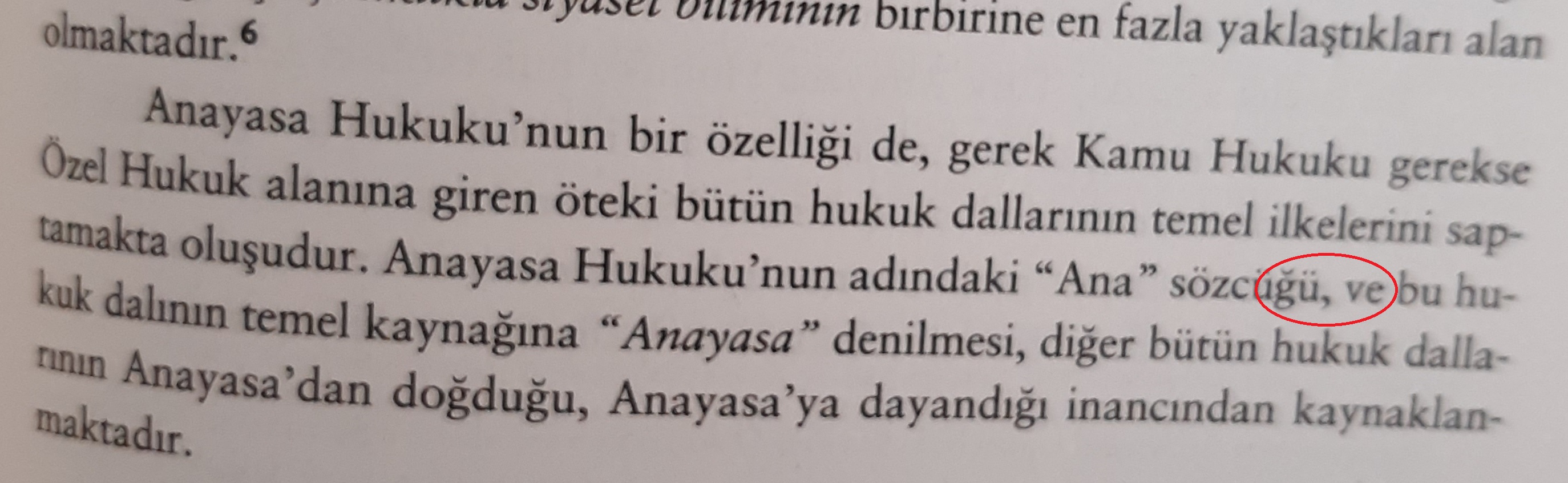
“özelliği de,” “gerek gerekse”ye değinmiyorum. Bağlaçlardan (“ve”, “veya”) önce virgül kullandıklarına göre sular seller gibi İngilizce konuştuklarına hükmedebiliriz. İyi de Türkçe yazıyorsunuz hanımlar, beyler!
Cüret nedir?
“Kendini bilmezlik, küstahlık” anlamında da kullanılan Arapça “cüret” kelimesinin yazıda tecessüm etmiş şeklini alttaki görselde bulacaksınız.

Böylesi delice bir cüretin “herkeze” nasip olması çok zor “hanım efendiler ve beyenfiler” tahmin edebileceğiniz üzere. “Herkeze” nasip olmaz “makele” yazarlığı”, o cihetle kişinin kendi yeteneklerini bilmesi iktiza eder. Tıpkı bu cüret kumkuması “beyenfi”de olduğu gibi efendim.
Hayırlı işler!
Gazetecilik öldü!
“Ünlü sanatçı İlyas Tetik intihar etti
Türkiye’nin en ünlü müzik insanları arasında yer alan, Ajda Pekkan’dan Sezen Aksu’ya, Müslüm Gürses’ten Ahmet Kaya’ya kadar çok sayıda sanatçıyla çalışan İlyas Tetik evinde intihar etti.”
Haberi dün gece, ekran karşısındaki koltukta uyuklarken NTV’den duydum. NTV, haberi “hayatına son verdi” olarak verdi. Bu sabah internette sörf yapıyorum; fakat “intihar”dan bahseden yok! Sanki İlyas Tetik eceliyle ölmüş! İlyas Tetik öldü, ruhu şâd olsun. Ancak gazetecilik çoktaaan öldü!
UN BOIS VANILLE, Serge Lutens
“To paraphrase Freud, it’s not the evil who are full of regrets, but the good.”
“Freud le dit bien: Ce n’est pas le Mal qui engendre des regrets mais le Bien.”
Montegrappa Dante Alighieri: Inferno Silver Rollerball
Se7en‘ı seyrederken elinizde de Montegrappa Dante Alighieri olacak… Yo, Paramount gibi bir otelde olmanız gerekmiyor…
As Italy marks 700 years since the death of Dante Alighieri, Montegrappa is dedicating a new limited edition series to its greatest literary treasure. Discover the many layers of Dante’s Divine Comedy with the sinfully priced Dante Alighieri: Inferno by Montegrappa.
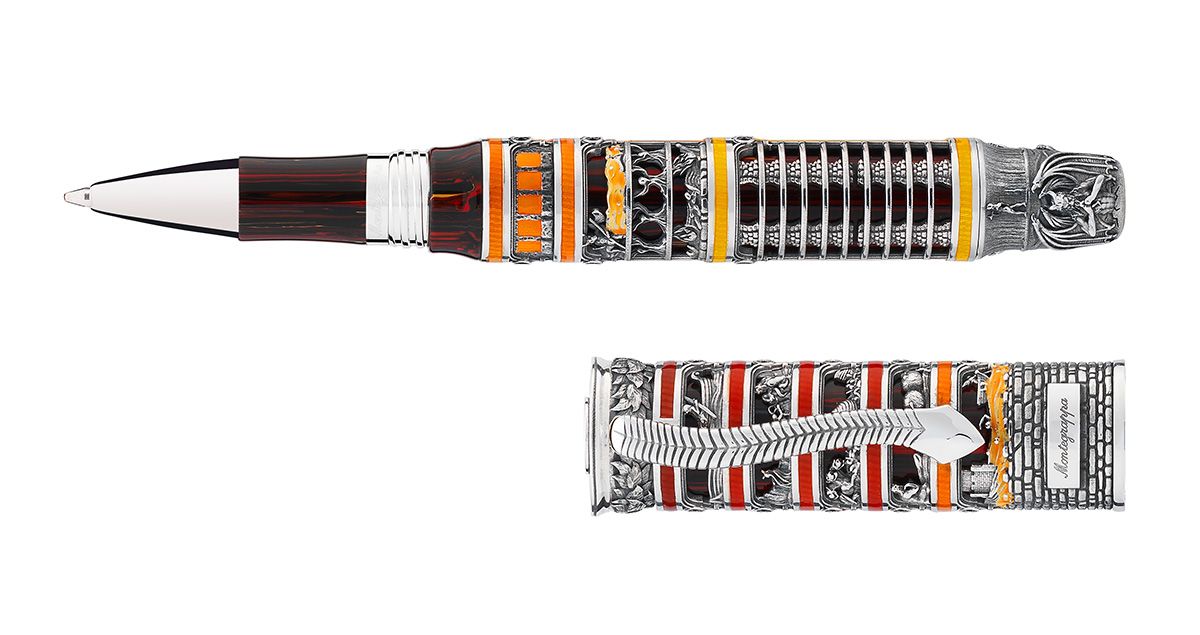
“The devil is in the detail” is a label often applied to Italian design, but the country’s oldest penmakers appear to be taking it literally. The newest extraordinary creation from Montegrappa features Lucifer himself on the base – chewing incessantly on Judas. The demon’s pointed tail seems to rise through the barrel and snake its way through the cap to form a pocket clip: the kind you might expect to see brandished by Robert de Niro in Angel Heart. This is no pen for the timid. Dante Alighieri: Inferno is the first edition from the Venetian maker’s new Divina Commedia writing series – a tribute to Italy’s most celebrated literary figure. 700 years after Dante’s death in 1321, his name rings eternal – even to the uninitiated. In Italy, he truly is immortal. By daring to write his most famous work in Florentine dialect, he paved the way for the use of a unitary language which later became the Italian.
The first volume from Dante’s epic trilogy is also the poet’s most vivid work, describing hell’s descending layers with equal measures of beauty, satire and gore. If biblical horror were a genre, Inferno would be its crown jewel. Montegrappa’s tribute spares little detail from Dante’s script, with the sins and punishments of hell’s nine circles recreated in intricate micro-sculpture. Sins of selfindulgence are represented on the cap by lust, gluttony, greed and wrath. The violent and malicious sins – violence, fraud and treachery – are reproduced on the barrel and blind cap.
The artisanal process behind Dante Alighieri: Inferno is rarely found outside the world of fine jewellery, but Montegrappa’s command of lost-wax casting has made it a darling of aficionados. With Dante exhibitions and tributes planned throughout Italy in 2021, the timing of Montegrappa’s release is both punctual and – after the torment of last year – oddly topical. True to the maker’s tradition, the story is told with opulent extravagance: options in silver and 18K yellow gold have been issued in editions of 333 and 9 pieces – a nod to Dante’s famous terza rima structure. Dante Alighieri: Inferno is housed in a custom case styled on an antique leather-bound edition of Inferno and is available now at authorised dealers.
From lacouronneducomte.com
Yabancıyız kendimize: Ahmed D. Kafadar, 82; Led Development of Triggers for Air Bags
Ahmed D. Kafadar, an entrepreneurial engineer who led the development of the explosive triggers used in automobile air bags, died of a heart attack on Jan. 17. He was 82 years old and lived in Englewood, Colo.
Mr. Kafadar earned a master’s degree from the Colorado School of Mines in 1943 and then went on to the Illinois Institute of Technology, where he worked on Government-financed ballistics research.
Mr. Kafadar applied his knowledge of ballistics to develop so-called life-saving explosive devices — first used in ejection seats for jet fighter planes and later as air-bag triggers. And he built a sizable business from commercializing those innovations.
Mr. Kafadar was the chairman of OEA Inc. in Englewood, a company with annual sales of more than $200 million and nearly 2,000 employees.
”Ahmed Kafadar was a pioneer in developing this technology for the aerospace field and then carrying that technology into the automotive industry,” said Robert Bartels, an industrial products analyst with William Blair & Company, a securities firm in Chicago.
Mr. Kafadar immigrated to the United States from Turkey in 1939. At the time, World War II had begun in Europe and the Turkish Government sent 50 of the nation’s most promising university students, including Mr. Kafadar, to America for safety and advanced education.
Mr. Kafadar, who became a United States citizen in 1946, founded Ordnance Engineering Associates in 1957. The company, which changed its name to OEA in 1969, began as a specialized military contractor, designing and manufacturing explosive devices mostly for ejector seats on military jets.
The first nonmilitary application for the company’s technology was in the Boeing 747 airliner, where a small propellant explosive is used to unfurl the safety chutes that passengers slide down to evacuate the plane after an emergency landing. In 1986, after the Challenger disaster, the National Aeronautics and Space Administration chose OEA to help design an escape system for the Discovery space shuttle.
Mr. Kafadar, according to Mr. Bartels, the industry analyst, was ”a phenomenal engineer” whose no-frills style of operation enabled his company to weather the ups and downs of the aerospace industry.
In the late 1980’s, Mr. Kafadar seized on the opportunity to enter a large new market in the auto industry. He adapted OEA’s explosive technology for use in smaller devices needed to activate and inflate air bags, and he overhauled his company for high-volume production.
As a manager, Mr. Kafadar had an uncommon appetite for work, arriving at the company offices at 5:30 A.M. each day, even the day before he died, noted his son, Charles Kafadar, the president and chief operating officer of OEA, who has succeeded his father as chief executive.
The elder Mr. Kafadar’s strategy and management style helped OEA to more than double its sales and profits over the last four years.
Mr. Kafadar is survived by his second wife, Claudia, of Englewood, and four children. His first wife, Maryanna, died in 1986. Mr. Kafadar’s four children are Charles, of Littleton, Colo.; Shirene, of Golden, Colo.; Karen, of Englewood, and James, of New York.
Steve Lohr, NY Times, Jan. 31, 1998
 Yamalı Poğaça